Medical examiners take the lead in this true crime show
About Secrets of the Morgue
Secrets of the Morgue puts medical examiners, forensic pathologists, and forensic anthropologists at the center of each episode of the series, which emphasizes autopsy reports more than most true crime shows, while still relating the subsequent murder investigations.
In each episode, medical examiners describe the specific details of autopsies in all types of murder cases, their technical elements, and how this information helps them identify a body, find the cause of death, or figure out the weapon used in a homicide.
The show includes detectives and others involved in the cases, along with a stock group of experts specializing in sociology, violent crime, forensic pathology, and homicide investigation (Mark Mendelson, Jooyoung Lee, and Jane Turner), who weigh in on the psychology and investigative aspects of each case.
The show also includes interviews with victims’ loved ones, re-creations, and police interviews in select cases, but no trial clips.
The Show Elements
Seasons: 1 (2018-2019)
Where to stream: Hulu, Amazon Prime Video, Discovery+
What if someone you love turns out to be a murderer?
About Someone You Thought You Knew
We all wonder if we truly know the people close to us—our partner, family members, friends. But what if we don’t really know someone at all, and they are, instead, a murderer? That’s the scary premise of Someone You Thought You Knew.
This true crime show consists of the usual elements—narration, re-creations, excerpts from police interviews, and testimonials from victims’ families and friends, who share their stories and reveal their surprise at finding out who their loved ones really are.
About half of the cases appear on other shows, such as Dateline, and the presentation is pretty typical of most true crime shows, so if you’re looking for something new and different, skip this one.
The Show Elements
Seasons: 2 (2018-2019)
Where to stream: Hulu, Amazon Prime Video, Discovery+
Retired homicide detective Joe Kenda shares stories from his 23-year career
(Note: This site contains affiliate links. As an Amazon Associate, I earn from qualifying purchases.)
About Homicide Hunter
A memoir of sorts, Homicide Hunter with Joe Kenda focuses on the murder cases and other investigations of one detective throughout his 23-year career: Joe Kenda of Colorado Springs, Colorado. Kenda boasts a 92% solve rate and provides a master class in investigation at a time before DNA testing. He recounts many of the hundreds of cases he has worked, solving murders of all types, during his career in Colorado Springs, like an uncle sharing war stories. Colleagues involved in the cases, and local reporters, also appear in the series.
Not every detective could carry an entire true crime series; Kenda succeeds. He often throws in what has become his catchphrase, “Well my, my, my,” upon an eye-opening discovery. Standout episodes include cases from his early career detailing what he learned and how he became a detective (see Season 4, Episode 14, “My First Case”), and he sometimes brings in the perspective of his wife and family, who show up in Season 8, Episode 19 (“Married to the Job”) and Season 9, Episode 20 (“The End”).
The show is a rare look into a lengthy investigative career, the stress of the job, the psychology behind interrogation, and personal aspects of being a detective, such as Kenda’s feelings at crime scenes and the toll his work took on his family.
Kenda also hosts two specials, Homicide Hunter: Never Give Up and Homicide Hunter: Devil in the Mountains, as well as American Detective with Joe Kenda, which brings in other detectives to share their cases.
The Show Elements
Seasons: 9 (2011-2020)
Where to stream: Hulu, Discovery+
More shows like Homicide Hunter: American Detective with Lt. Joe Kenda, The Case That Haunts Me, Detective, Detective Diaries, The Detectives Club: New Orleans, The Detectives: Murder on the Streets, Detectives: My Killer Case, Homicide Hunter: Devil in the Mountains, Homicide Hunter: Never Give Up, I Am Homicide, The Killer Closer, Murder Chose Me, Real Detective
A humorous look at strange murders, murderers, and evidence
(Note: This site contains affiliate links. As an Amazon Associate, I earn from qualifying purchases.)
About Bizarre Murders
For a lighter, comical take on murder cases, check out Bizarre Murders. Hosted by former FBI agent Steve Moore, this true crime show presents dramatized versions of strange murder cases and characters, through re-enactments and commentary on them. The show omits interviews with detectives, experts, or victims’ loved ones, choosing instead to present a semi-humorous version of a case, with some details changed.
Moore provides sardonic and amusing asides to the often dumb mistakes killers make and adds his expert perspective on the cases. Episodes include weird situations like vampires, cannibalism, a murderer obsessed with Dexter, and nicotine poisoning. Sometimes the murder itself isn’t bizarre, but the people involved are (e.g., Mexican wrestlers), or the evidence is weird (hot dog bun, anyone?). Episodes are on the shorter side, approximately 22 minutes, great for brief bites when you’re jonesin’ for some true crime.
The Show Elements
Seasons: 1 (2018)
Where to stream: True Crime Network, Tubi, The Roku Channel
Video surveillance is a detective’s best friend, and a witness that doesn’t lie
About See No Evil
It’s easy to overlook the fact that we are watched almost everywhere we go, as silent surveillance cameras shadow our daily lives. Murderers forget this small fact, too, but cops are well aware.
Video surveillance is investigators’ key to catching killers in See No Evil, using this “witness that doesn’t lie.”
A sister show to Hear No Evil(which focuses on audio recordings), See No Evil features cases involving video recordings of events before, during, and after all kinds of murders, recordings from store surveillance videos, home security cameras, and other cameras. Some of the video is obvious—a killer disposing of evidence, a victim driving through the streets—while others are chilling scenes of a killer stalking their prey or getting rid of a car with a body hidden in the trunk.
The 10 seasons of this true crime show make for interesting and binge-able viewing. Episodes include narration, re-creation, police interviews, and detectives and victim’s loved ones talking about the cases. Some of the cases have been covered elsewhere, but See No Evil provides extra detail from the videos.
The Show Elements
Seasons: 13 (2014)
Where to stream: Amazon Prime Video, Hulu, and Discovery+
More shows like See No Evil: Hear No Evil, The Murder Tapes, Confessions of a Serial Killer, Lies, Crimes & Video
Detectives trace the last day of a murder victim’s life
About Dateline: The Last Day
Dateline: The Last Day is a Dateline spin-off that presents murder cases through the perspective of the victim’s last day (much like The Last 24). The tone surrounding the true crime show is more serious than Dateline, but it features regular Dateline correspondents Keith Morrison, Josh Mankiewicz, and Andrea Canning, along with additional contributor Stephanie Gosk.
Each episode follows the events of the victim’s last day and the key people they interacted with during those events, described by the investigators involved, victims’ friends and families, and through police interviews.
In the first season, the show has less emphasis on intimate partner homicide than Dateline and includes murders by strangers, friends, and others. And unlike Dateline, it omits lengthy trial clips or description of the trials. Instead, the focus is squarely on the timeline of the victim.
If you can’t get enough Dateline in your life, this show is for you.
How the Secret Service used a counterfeiting investigation to the find the victims of James DeBardeleben
Suzanne Hamlin
(Note: This site contains affiliate links. As an Amazon Associate, I earn from qualifying purchases.)
The Mall Passer doesn’t sound like the name of a serial killer. And technically, it isn’t. It’s the name of a counterfeiter hunted by the Secret Service for four years, whose arrest led to the discovery of a trove of evidence and constellation of crimes not at all related to counterfeiting, and much more disturbing.
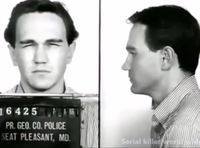
This is the story of James Mitchell “Mike” DeBardeleben and the reverse investigation that occurred as the Secret Service searched for his victims following his arrest in 1983 in Tennessee for passing and manufacturing fake $20 bills, which he used to buy small items at malls across the country, pocketing the change and thereby making a profit.
James Mitchell “Mike” DeBardeleben
The Evidence
The Secret Service was first established in 1865 to combat counterfeiting (one of the many fascinating facts that can be gleaned from the DeBardeleben case). The agency was in the midst of investigating DeBardeleben when they stumbled across, in his car and storage units in Virginia, police paraphernalia, handcuffs, photos of nude and bound women, guns, women’s underwear, newspaper clippings of other people’s crimes, notes and diaries, and audio tapes, all found while searching for the printing press he used to make the counterfeit bills.
Most disturbing were the photos, notes, and audio tapes. The tapes recorded the torture and sexual assault of several women, who investigators surmised were abducted when DeBardeleben posed as a police officer to lure them into his car.
The notes detailed his plans, goals, and tasks, including the type of women and torture he desired, details on how to abduct women, and ideas on how to be more attractive to women and control them. This evidence more than sparked the curiosity of the investigators, Secret Service Agents Greg Mertz, Dennis Foos, Mike Stephens, and Jane Vezeris, who were determined to find the unknown victims and put names to their faces and the crimes committed against them. Were these women murdered? Kidnapped? Sexually assaulted? DeBardeleben refused to talk, and the FBI declined to get involved without any names of victims.
The Investigation
The Secret Service pushed on and sent the photos of the unknown women to law enforcement agencies across the US. Some police departments contacted the Secret Service with matches to open cases regarding abduction, sexual assault, and other crimes. And there was an FBI case in Maryland, the kidnapping and rape of Laurie Jensen, which finally spurred the FBI’s involvement.
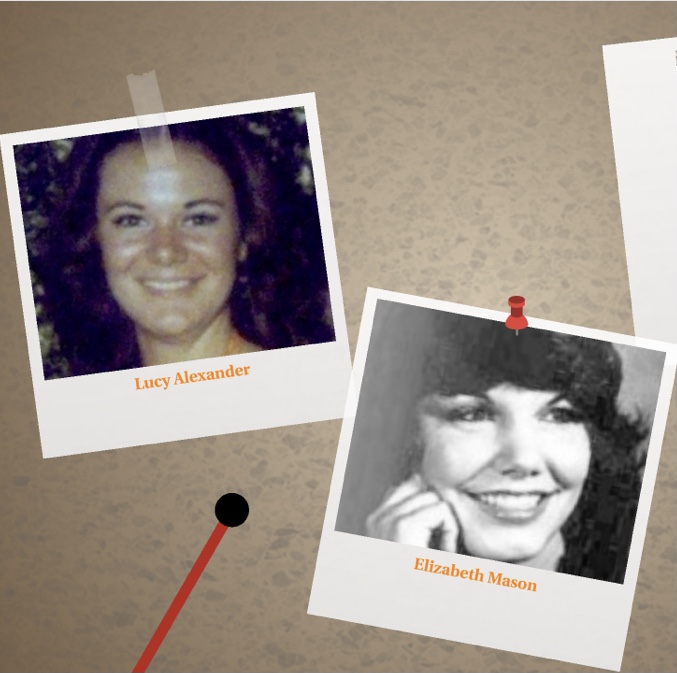
Lucy Alexander and Elizabeth Mason
The FBI was able to identify DeBardeleben in photos he appeared in with the victims, some showing parts of his body (but not his face), by matching freckles and moles on his body to the body in the photos. This was key to the prosecution, along with handwriting analysis and eyewitness testimony from women who could identify themselves in the photos and tapes.
The Prosecution
He was charged with kidnapping, sexual assault, robbery, sodomy, armed robbery, and aggravated criminal sexual assault in Delaware, Maryland, Connecticut, Missouri, Virginia, and New Jersey. In the end, DeBardeleben was sentenced to 375 years for counterfeiting, kidnapping, attempted robbery, and sodomy. The victims of these crimes include Jensen, Lucy Alexander, Elizabeth Mason, Dianne Overton, Maria Santini, and David Starr.
It seems nothing was off-limits for this jack-of-all-crimes. He was also indicted for the murders of Jean McPhaul in Louisiana and Edna Terry McDonald in Rhode Island, but was never tried for these murders, as prosecutors felt that the 375-year sentence for his other crimes would keep him in prison for the rest of his life. Rightly so, as he died of pneumonia in prison in 2011. Investigators speculate that he may have committed many more crimes involving up to 200 victims, including the murder of Joe Rapini, and may have been a serial killer.
Where to Watch the Case
Hear No Evil, The New Detectives, and Cruel Deception (an FBI Files special) capture the many twists of the DeBardeleben case. Hear No Evilincludes excerpts from the audio tapes (omitting the most graphic parts), while Cruel Deception includes photos of the evidence found during the investigation, as well as some of DeBardeleben’s notes.
The New Detectiveslooks at the story from the perspective of the FBI profiler who examined the case, and incorporates some photos of evidence, but none of the audio. The case is also detailed in Stephen G. Michaud’s book Beyond Cruel: The Chilling True Story of America’s Most Sadistic Killer, previously published as Lethal Shadow: The Chilling True-Crime Story of a Sadistic Sex Slayer.
Click image to buy book
Learn more about the case in Hear No Evil(“The Sound of Terror,” Season 1, Episode 5), The New Detectives(“Mind Hunters,” Season 2, Episode 1), and Cruel Deception.
Audio evidence is the key to solving murder cases in this chilling true crime show
About Hear No Evil
A snippet of audio is played. Graphic. Unsettling. You won’t know who the voice is—the victim or the killer—until almost the end of the episode. That’s how Hear No Evil compels you to watch and takes you on a twisty and suspenseful ride towards a big reveal.
It’s the type of true crime show that makes you think, this case could be a movie. Take “The Sound of Terror” (Season 1, Episode 5), for instance, which starts with Secret Service agents talking about a counterfeiting case and ends up in a place surprising to even the investigators.
A companion to See No Evil, Hear No Evil places audio recordings at the center of episodes, recordings of murders themselves, or events leading up to them, recordings that end up being the key to solving the case and often changing detectives’ initial impressions of the suspect. No need for narration here; the recordings and police interviews speak for themselves.
The Show Elements
Seasons: 1 (2017)
Where to stream: Amazon Prime Video, Hulu, and Discovery+
More shows like Hear No Evil: See No Evil, The Murder Tapes, Confessions of a Serial Killer, Lies, Crimes & Video
Detectives solve cold cases through forensics and other techniques
Cold Case Files
About Cold Case Files
Cold Case Files comes in two flavors: the classic series narrated by Bill Kurtis (sometimes called Cold Case Files Classic) and the re-boot narrated by Danny Glover and later Kurtis. Kurtis’ mellifluous voice will make you sleepy, but the cases are too absorbing and the writing too deftly crafted to nap through.
From serial killers to serial rapists, episodes feature one to two stories each and focus on investigative techniques used to crack cold cases, particularly DNA and other forensics, including forensic anthropology, entomology, and even botany. Forensic specialists appear on the show and sometimes demonstrate the steps of the methods they used to help unravel a cold case, such as DNA testing, fingerprint identification, or sculptural reconstruction of the face, providing a fascinating look inside the field.
This true crime show doesn’t dwell on the victim’s background or suspect’s trial and instead leads viewers through the strategies used to solve long-unsolved cases. The newer version of Cold Case Files has more re-creations and less narration, allowing those involved to tell their stories in their own words. Convicted offenders sometimes offer their accounts of the crimes, and sometimes even fess up to them.
The Show Elements
Seasons: 9 (1999-2012, 2017-)
Where to stream: Amazon Prime Video, The Roku Channel, Hulu, Netflix, Peacock, and Discovery+
Small towns learn that they aren’t immune to murder
About Murder In The Heartland
A sleepy small town is awakened by a shocking murder. So is the premise of Murder in the Heartland.
Similar to Heartland Homicide and Murder Comes to Town, this true crime show focuses on homicides occurring in quiet, languid small towns across the US, rural areas not just in the “heartland” of the country. From Idaho to Indiana, the show travels to small towns to interview families and detectives in their surroundings, showing them going about their daily lives, feeding pets or making dinner, as they tell the stories of the murders (with motives ranging from robbery to jealousy) that changed them forever. It’s a slice of life that illustrates the ordinariness of their lives in juxtaposition with shocking murders that jarred them from a normal existence supposedly safe from murder.
Murder in the Heartland combines interviews with detectives and victims’ families and friends, photos of ordinary family life, re-creations, and police interviews, and omits any narration, letting those involved tell the stories themselves. Detectives sometimes walk the audience through the crime scene, adding another realistic element to the story.
The Show Elements
Seasons: 6 (2017-)
Where to stream: Amazon Prime Video, The Roku Channel, Hulu, and Discovery+






 True Crime Docket