The FBI Files offers a wider take on true crime cases, covering murder but also bank robberies, kidnappings, bombings, organized crime, and other crimes investigated by the FBI, sometimes in conjunction with local authorities.
FBI agents, local detectives, and others working on the cases share their experiences and describe investigative and interview techniques, going into detail about them similar to the coverage on The New Detectivesand the original Cold Case Files.
FBI agents also discuss the use of profiling on some cases, including cases involving serial killers. The show incorporates re-creations and some historical footage, but few episodes bring on victims’ loved ones.
The Show Elements
Seasons: 7 (1998-2005)
Where to stream: Tubi, The Roku Channel, Hulu, Amazon Prime Video
More shows like The FBI Files: FBI Criminal Pursuit, FBI: Critical Incident, FBI Takedowns, FBI’s Most Wanted, The New Detectives, Cold Case Files
How the Secret Service used a counterfeiting investigation to the find the victims of James DeBardeleben
Suzanne Hamlin
(Note: This site contains affiliate links. As an Amazon Associate, I earn from qualifying purchases.)
The Mall Passer doesn’t sound like the name of a serial killer. And technically, it isn’t. It’s the name of a counterfeiter hunted by the Secret Service for four years, whose arrest led to the discovery of a trove of evidence and constellation of crimes not at all related to counterfeiting, and much more disturbing.
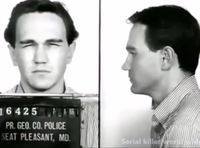
This is the story of James Mitchell “Mike” DeBardeleben and the reverse investigation that occurred as the Secret Service searched for his victims following his arrest in 1983 in Tennessee for passing and manufacturing fake $20 bills, which he used to buy small items at malls across the country, pocketing the change and thereby making a profit.
James Mitchell “Mike” DeBardeleben
The Evidence
The Secret Service was first established in 1865 to combat counterfeiting (one of the many fascinating facts that can be gleaned from the DeBardeleben case). The agency was in the midst of investigating DeBardeleben when they stumbled across, in his car and storage units in Virginia, police paraphernalia, handcuffs, photos of nude and bound women, guns, women’s underwear, newspaper clippings of other people’s crimes, notes and diaries, and audio tapes, all found while searching for the printing press he used to make the counterfeit bills.
Most disturbing were the photos, notes, and audio tapes. The tapes recorded the torture and sexual assault of several women, who investigators surmised were abducted when DeBardeleben posed as a police officer to lure them into his car.
The notes detailed his plans, goals, and tasks, including the type of women and torture he desired, details on how to abduct women, and ideas on how to be more attractive to women and control them. This evidence more than sparked the curiosity of the investigators, Secret Service Agents Greg Mertz, Dennis Foos, Mike Stephens, and Jane Vezeris, who were determined to find the unknown victims and put names to their faces and the crimes committed against them. Were these women murdered? Kidnapped? Sexually assaulted? DeBardeleben refused to talk, and the FBI declined to get involved without any names of victims.
The Investigation
The Secret Service pushed on and sent the photos of the unknown women to law enforcement agencies across the US. Some police departments contacted the Secret Service with matches to open cases regarding abduction, sexual assault, and other crimes. And there was an FBI case in Maryland, the kidnapping and rape of Laurie Jensen, which finally spurred the FBI’s involvement.
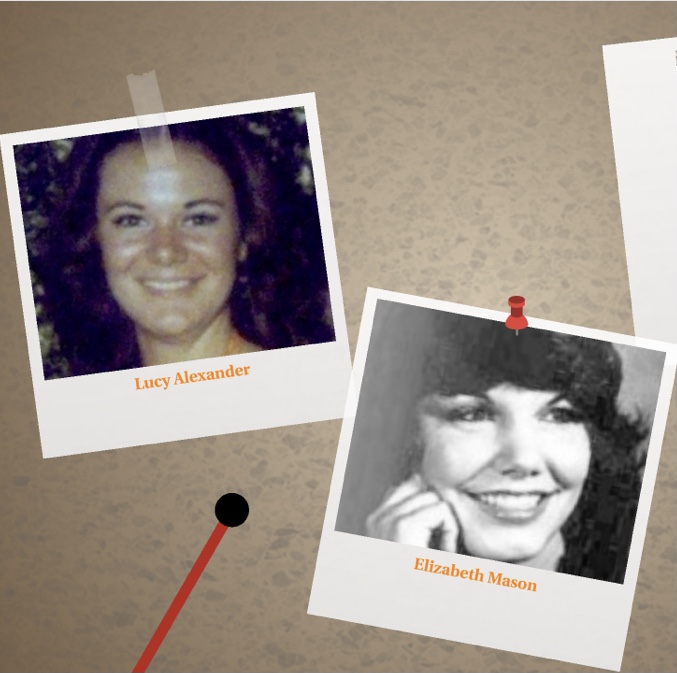
Lucy Alexander and Elizabeth Mason
The FBI was able to identify DeBardeleben in photos he appeared in with the victims, some showing parts of his body (but not his face), by matching freckles and moles on his body to the body in the photos. This was key to the prosecution, along with handwriting analysis and eyewitness testimony from women who could identify themselves in the photos and tapes.
The Prosecution
He was charged with kidnapping, sexual assault, robbery, sodomy, armed robbery, and aggravated criminal sexual assault in Delaware, Maryland, Connecticut, Missouri, Virginia, and New Jersey. In the end, DeBardeleben was sentenced to 375 years for counterfeiting, kidnapping, attempted robbery, and sodomy. The victims of these crimes include Jensen, Lucy Alexander, Elizabeth Mason, Dianne Overton, Maria Santini, and David Starr.
It seems nothing was off-limits for this jack-of-all-crimes. He was also indicted for the murders of Jean McPhaul in Louisiana and Edna Terry McDonald in Rhode Island, but was never tried for these murders, as prosecutors felt that the 375-year sentence for his other crimes would keep him in prison for the rest of his life. Rightly so, as he died of pneumonia in prison in 2011. Investigators speculate that he may have committed many more crimes involving up to 200 victims, including the murder of Joe Rapini, and may have been a serial killer.
Where to Watch the Case
Hear No Evil, The New Detectives, and Cruel Deception (an FBI Files special) capture the many twists of the DeBardeleben case. Hear No Evilincludes excerpts from the audio tapes (omitting the most graphic parts), while Cruel Deception includes photos of the evidence found during the investigation, as well as some of DeBardeleben’s notes.
The New Detectiveslooks at the story from the perspective of the FBI profiler who examined the case, and incorporates some photos of evidence, but none of the audio. The case is also detailed in Stephen G. Michaud’s book Beyond Cruel: The Chilling True Story of America’s Most Sadistic Killer, previously published as Lethal Shadow: The Chilling True-Crime Story of a Sadistic Sex Slayer.
Click image to buy book
Learn more about the case in Hear No Evil(“The Sound of Terror,” Season 1, Episode 5), The New Detectives(“Mind Hunters,” Season 2, Episode 1), and Cruel Deception.




 True Crime Docket