A stellar true crime show doesn’t just have compelling cases, it has attention-getting writing and a narrator with a voice and rhythm that can deliver that writing with panache. Most shows offer run-of-the mill narrators who possess a strong voice but don’t leave their mark on the genre. If the case is interesting enough, they’ll suffice, but sometimes you want to sink into the voice of a narrator who envelops you into the world of a case. If you’re the type who likes to listen to your true crime rather than watch, check out how these seven experts spin their tales.
1. Keith Morrison, Dateline
Keith Morrison isn’t just a narrator or interviewer, he’s a storyteller. He delivers the lines of a Datelineepisode like your favorite uncle telling a scary bedtime story (check out his tellings of “The Night Before Christmas” and other Christmas classics). His episode intros set the stage for murder cases that might not be that interesting by themselves, but he makes them so, very, interesting. He hits the words with just the right tone, inflecting his trademark creepiness just enough to compel you to listen.
Actors Paul Winfield and Keith David match the amazing writing of the original City Confidential with their fluid storytelling and strong voiceovers. Winfield’s voice sounds like a semi-distant relative of Morgan Freeman, and David’s sounds like a friend sharing an easy conversation over coffee. Before describing specific murder cases, each episode features an initial segment laying out the history of the city or town where they occurred, and Winfield and David make even the most podunk of towns intriguing.
Not afraid to include lightness and humor when appropriate, the classic series required voiceover actors who could step up to the plate and deliver the lines with precision. Winfield and David met that challenge. The show’s revival in 2021 brought on actor Mike Colter, who has a great voice but lacks the personality of Winfield and David, and the episodes fail to live up to the intriguing writing of the 1998-2005 episodes.
Paul Winfield narrating City Confidential
Keith David narrating City Confidential
4. Bill Kurtis, Cold Case Files and American Justice
Before retiring, Bill Kurtis had a long career as a journalist and news anchor, but his narration of true crime shows and documentaries doesn’t sound like a typical news reporter. Kurtis has a smooth, rich voice that keeps you listening while lulling you into stories revolving around cold cases and the criminal justice system. Kurtis’ voice alone is worth watching any show or documentary he narrates, but coupled with the amazing writing, it makes Cold Case Filesand American Justicemust-watch shows. Kurtis also narrates the series Cold Case Files: DNA Speaks.
Cold Case Files
American Justice
5. Stacy Keach, American Greed
Veteran actor Stacy Keach, known for the show Mike Hammer and many other television and film roles, brings his voice to another top-shelf show: American Greed. Keach relates stories of corruption, greed, and corporate and financial crimes like that grandfather who tells stories around the fireplace on a cold winter night. You’ll want to pull up a blanket and pillow and sink into the episodes.
American Greed
6. Christine Estabrook, Deadly Wives
Actress Christine Estabrook is another narrator who delivers the smart writing of a true crime show with just the right punch. Deadly Wives is a clever show that sometimes injects humorous asides about women who kill their spouses, and Estabrook knows just how to convey them. Wives kill their spouses, Estabrook narrates the cases, and her voice adds a hint of sarcasm—you can almost hear her rolling her eyes at the women’s mistakes and lies. It’s a shame the run of the show was so short.
Deadly Wives
7. Joe Alaskey, Murder Comes to Town
Murder Comes to Town, which focuses on murders in small towns, has two narrators who vary in style (Joe Alaskey and Anthony Call), but Alaskey wins the race for the creepier narration. He sounds like the voice-child of Paul Winfield and Vincent Price and delivers words like “murder” and “bloody corpse” with an electricity that sends a chill across the screen and up your spine. When Alaskey died in 2016, actor Anthony Call took over the narration, without the same creepy flair as Alaskey.
On August 23, 1987, Selonia Reed was found dead in her 1986 Chevrolet Sprint in a vacant lot at a local convenience store in Hammond, Louisiana. Her body was covered in lotion, and she had suffered blunt force trauma to her face, with multiple stab wounds to her body, including an umbrella between her legs.
Selonia Reed is my mother.
The murder remained an unsolved cold case for over 30 years, shrouded in mystery and unanswered questions, until a cigarette butt was DNA tested and found to match an individual who was indicted as a co-defendant. Continuous investigation by law enforcement allowed the pieces of the puzzle to come together, ultimately leading to a shocking revelation—the connection to my own father, Reginald Reed Sr.
Nearly 40 years after the murder, on November 18, 2022, my father was found guilty of second-degree murder and is now serving life in prison for her death.
Writing a Memoir About My Mother’s Murder
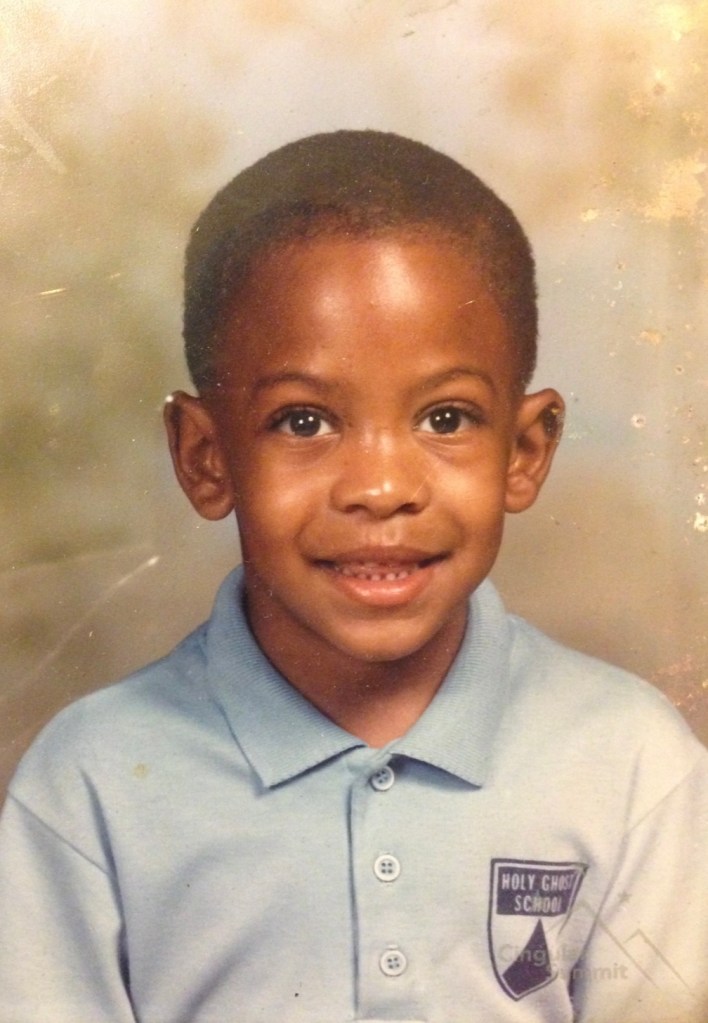
Only 6 years old when the crime occurred, I had to rely on my childhood memories while gathering evidence for my memoir about the murder, The Day My Mother Never Came Home. My memories from that time were fragmented and influenced by various factors, including my father’s narrative. My goal was closure, using available resources and corroborating evidence to construct an accurate portrayal of the events leading up to the crime. I also aimed for ethical storytelling based in sensitivity, empathy, and a commitment to truth and justice.
Reggie Reed Jr.
Every crime is a web of interconnected lives, each deserving of understanding and compassion, even in the face of unimaginable tragedy. Unlike a traditional journalism approach that prioritizes objectivity and detachment, my narrative is deeply personal, intertwined with my own emotions, experiences, and relationships. My closeness to the story compelled me to approach it with heightened sensitivity, recognizing the interconnected lives and human complexities behind the crime.
To write a true crime memoir about my mother’s murder, I had to delve into the depths of past events, piece together fragments of information, and unearth long-buried truths. Central to this endeavor was the task of requesting and collecting evidence from various law enforcement agencies, a journey marked by challenges, revelations, and profound shifts in perspective.
The Trail of Evidence in the Murder
Gathering evidence first involved submitting formal requests to relevant law enforcement agencies and speaking with a defense attorney. I had to navigate bureaucratic channels, understand legal protocols, and exercise patience as responses trickled in. Each request was accompanied by a detailed explanation of the information I was seeking, ranging from case files, to witness statements, to forensic reports and investigative notes. I waited for weeks—or even months—for law enforcement agencies to provide information, delaying my research and writing.
As the responses started to trickle in, I immersed myself in a sea of documents, each offering a glimpse into the intricate web of events that shaped the crime. Some documents corroborated what I already knew, providing additional context and depth to key moments in the story. Others, however, unveiled startling revelations and uncovered details that had eluded me until that point.
One startling document revealed several life insurance policies that were taken out over the year leading up to my mother’s death, and a couple that were initiated as soon as two weeks before the murder. This discovery raised suspicions about possible motives and connections to the crime that had not been previously considered. The document not only provided a new angle to the investigation but also highlighted the complexity of the case and the need to dig deeper into the financial aspects surrounding the crime.
I also came across previously undisclosed witness accounts that shed new light on the sequence of events leading up to the murder, challenged existing narratives, and led to a reevaluation of key suspects in the case. One witness provided a detailed description of a vehicle leaving the scene at an unusual hour, contradicting the initial timeline presented by other witnesses.
These discoveries reshaped my understanding of the events and the individuals involved. What I had once perceived as a straightforward narrative became a complex tapestry of intersecting lives, hidden agendas, and unforeseen consequences. It forced me to reevaluate my assumptions, question my interpretations, and embrace the nuances of human behavior in the face of adversity.
Another pivotal moment in the evidence-gathering process was the analysis of forensic reports. I had to familiarize myself with forensic terminology, understand the nuances of forensic analysis, and cross-check facts to ensure accuracy. These reports related to the crime scene, my mother’s injuries, and the potential motives behind the murder, reports that either contradicted or corroborated witness testimonies and suspect statements. I was skeptical when encountering conflicting information or discrepancies between witness testimonies and forensic findings, but the convergence of witness accounts, forensic evidence, and official reports painted a vivid picture of the crime, its aftermath, and the subsequent investigation.
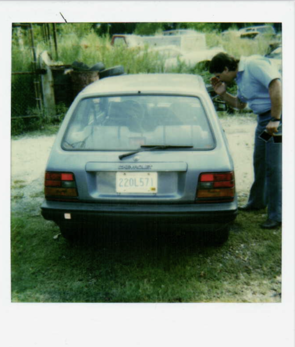
The 1986 Chevrolet Sprint
The Emotional Impact of Reading Evidence About My Mother’s Case
As I discovered new information and grappled with its implications, I felt a range of emotions: shock, disbelief, anger, and empathy. The evidence humanized the individuals involved, reminding me of the inherent complexities of human nature and the capacity for both good and evil within us all.
I also encountered conflicting information that challenged my perceptions of my father’s guilt or innocence. Some evidence pointed toward motives or connections that could implicate him, and other information and witness accounts raised doubts or alternative explanations. I realized the need for a comprehensive and unbiased approach to understanding the motives and individuals involved in the crime, without jumping to conclusions or being influenced solely by my emotions or preconceived notions.
The journey of requesting and collecting evidence for my true crime memoir was a transformative experience marked by discovery, introspection, and emotional resonance. It challenged me to confront uncomfortable truths, navigate moral ambiguity, and honor the complexity of human stories. Ultimately, it reinforced my belief in the power of storytelling to illuminate truths, foster empathy, and inspire meaningful change.
Reginald L. Reed Jr. is an author and an accomplished professional in the pharmaceutical industry. He holds a master’s degree in business and global marketing. In his first book, The Day My Mother Never Came Home, Reed recalls the events surrounding the unsolved murder of his mother and the subsequent indictment and trial of his father, nearly 40 years later. His story will be featured in an episode of Fatal Attraction, releasing July 22, 2024. Visit rlreed.com to learn more.
Can’t get enough of Keith Morrison? Here are 10 more of his best episodes from Dateline, complete with twisty stories, creepy voiceovers, and suspect pushback.
(Note: This site contains affiliate links. As an Amazon Associate, I earn from qualifying purchases.)
1. “The Last Ride” (Season 31, Episode 1)
Professional cyclist Moriah Wilson is found murdered in her apartment in Austin, Texas, in 2022, dead from two gunshot wounds. Was it her colleague and romantic interest, fellow cyclist Colin Strickland? Or someone else? As the police investigate, they discover video surveillance of a vehicle arriving at the apartment just before the murder. It’s a twisty episode full of jealousy, stalking, and murder, even a suspect on the lam, who flees to Costa Rica to start a new life under an assumed name but is caught 43 days later.
2. “The Real Thing About Pam” (Season 30, Episode 22)
In 2011, Betsy Faria is found stabbed to death in her home in Missouri. Police find bloodstained slippers in her husband, Russell’s, closet, and a document by Betsy expressing her concern that he might kill her. Betsy’s friend tells the police that he had threatened to kill Betsy. But he had an alibi, and he wasn’t the recipient of the life insurance money. The killer is also suspected in two other murders. If you can’t get enough of the case, check out Keith Morrison’s podcast on it and NBC’s limited series, The Thing About Pam.
3. “The Ascension of Mother God” (Season 30, Episode 4)
The mummified body of spiritual leader Amy Carlson, who called herself “Mother God,” is found in the house of some of the members of her cult, Love Has Won, in rural Colorado. The body was wrapped in Christmas lights and covered with a sleeping bag. Was it murder or did she die another way? The episode is full of conspiracies, cult beliefs, and other weirdnesses perfect for Keith to report on.
4. “Buried Secrets” (Season 20, Episode 58)
David Jackson disappears in 1988 in Florida, just before he is supposed to meet someone at a motel. Three months later, his car is discovered at the airport, but police have no other leads. The case goes cold until 14 years later, when a new detective links a skeleton in a box to his disappearance. The bones were recovered during the construction of a new Walmart in Florida years earlier. Further investigation leads to a confession, but were all the killers caught? Is everyone telling the truth? Keith interviews one of the suspects and pushes for answers.
5. “Tangled” (Season 24, Episode 38)
In Walsenburg, Colorado, Ralph Candelario is found in front of his house, injured and calling for help. His wife, Pam, is found murdered inside. Both had been beaten by burglars in the middle of the night. When investigators look at the closest people in Pam’s circle, they discover another murder by their main suspect. A letter to the town newspaper, written by the suspect, raises the suspicions of police and leads to answers.
6. “Secrets in a Small Town” (Season 20, Episode 17)
In Alabama, Theresa Mayfield is found shot dead in her car on a dirt road. She had gone there to help a friend whose car had broken down, but the police only discover her body in her car, with the window rolled down. With no other clues, the case goes cold until a witness comes forward, claiming that he had been on the same road that day and someone had given him a gun in a plastic bag. The gun was the murder weapon.
7. “The Family Secret” (Season 18, Episode 26)
When Lloyd Ford leaves his wife and family in Ainsworth, Nebraska, his children assume he’ll come back. Years pass, and he never returns, so his wife files for divorce. But one of his daughters knows what really happened, that he’s been dead for years, and it takes her 25 years to tell anyone. Keith interviews the daughter, and the story she reveals is both shocking and heartbreaking.
8. “In the Dead of Night” (Season 19, Episode 3)
At a farm in rural Nebraska, Wayne and Sharmon Stock are found shot dead on Easter Sunday in 2006. Police immediately look to their closest circle and become suspicious of their nephew Matthew, who was supposedly angry at them over money. He fails a polygraph and upon questioning, confesses, saying that he and his cousin Nick murdered the couple. But an engraved ring found at the murder scene is unexplained. When police investigate, they begin to question Matthew’s confession. If you’ve ever been skeptical about police interrogations, polygraphs, and the Reed technique, check this episode out.
9. “The Disappearance of Debbie Hawk” (Season 18, Episode 55)
In Hanford, California, Debbie Hawk’s children come home to find her missing and blood leading from the bedroom to the garage. Papers are scattered everywhere. To the police, the crime scene looks staged. They find her car abandoned with keys in the ignition. Debbie’s ex-husband has an alibi—he was at home with the kids all night. But suspicions build, and they divide the family. Keith’s pushback against the main suspect, who he interviews, is classic.
10. “Miles from Nowhere” (Season 22, Episode 5)
At a remote cabin in the Sierra Nevada Mountains, Chad Wallin-Reed and his family feel threatened by vandals who stole a light from their property, concerned due to recent break-ins at their cabin. When the vandals return the following night, Chad fires a warning shot at their car then follows in his own car. When he catches up to them, someone fires a gun at him, so he continues to follow them and fires back. The car stops, and he approaches, finding the driver wounded, possibly dead. In fact, he had shot not just the driver but six men. Chad tells the police that they had shot at him and that it was all in self-defense. But that’s only one side of the story, and when police investigate, the truth surfaces.
Grab your favorite Halloween candy, and turn the lights off for these spooky murder cases. Many of the murders occurred on Halloween, at parties, at bars, or when trick-or-treaters ate poisoned candy, and some involve dark nights filled with vampires, paganism, and other elements scary enough to keep you away from Halloween celebrations and trick-or-treaters. From Homicide for the Holidays to Bizarre Murders, these episodes offer something spooky for every true crime junkie.
Homicide for the Holidays: “Halloween Horror” (Season 4, Episode 5)
On Halloween morning 2010, in Oak Harbor, Ohio, Laurie Morse is having trouble getting in contact with Derek Griffin, her nephew, and her sister Sue Liske. When Laurie calls her other nephew, Devon, who is at home, he checks his parents’ bedroom and finds blood. Sue and her husband Bill Liske are dead in the bed. They had been shot multiple times. Upon further investigation of the house, police find Derek dead in his bedroom from blunt force trauma. There is no evidence of forced entry or burglary. Neighbors had heard a banging noise that morning. Police consider whether the murders were part of a cult activity because they occurred on Halloween. When police question Devon, they discover that his stepbrother BJ Liske was at home that morning but was gone by the time Devon returned from church. Further investigation reveals troubling family dynamics and that the killer is close to home.
Homicide for the Holidays: “All Hallow’s Evil” (Season 4, Episode 5)
It’s Halloween 2012 in Mount Pleasant, Michigan, and Rebekah Gay doesn’t show up for work. Her manager checks her home, but she’s missing and her purse is there. He then finds her car at a bar near her home, but no one had seen her there, and the driver’s seat had been pushed back. Police talk to John White, Rebekah’s mother’s boyfriend, who went to her home to babysit Rebekah’s son on Halloween morning. He says that he talked to Rebekah from another room until she left for work but never actually saw her. Police find blood in the back of his truck, as well as a necklace. They also discover that he had been convicted of attempted murder and involuntary manslaughter in the past.
Dateline NBC: “Under a Halloween Moon” (Season 22, Episode 6)
In this episode, Josh Mankiewicz details the murder of Joel Lovelien, which occurred outside a bar he went to with his fiancée for a Halloween party in 2007 in North Dakota. Lovelien was beaten to death in the parking lot, and police search for the killer among the large group of people in costume. This one has a surprise ending.
Dateline NBC: “The Halloween Party” (Season 26, Episode 5)
Keith Morrison lends his spooky narration to the story of Chelsea Bruck, who attends a Halloween party as Poison Ivy at a rural property in Michigan in 2014. She disappears that night, and police find her body several months later. She had been sexually assaulted and died from blunt force trauma.
Dateline NBC: “The Night Before Halloween” (Season 19, Episode 53)
It’s Halloween morning 1984, and Robin Hoynes is found dead at Kentucky Fried Chicken in Torrance, California, where she worked as assistant manager. Police find evidence of tampering on the restaurant safe and surmise that Robin had been stabbed in an attempted robbery, yet there were no signs of forced entry. They also discover a few drops of blood on the safe and some foam rubber on the floor. They question William Marshall, a former assistant manager who had been recently fired, but his girlfriend provides him an alibi. Police find a boning knife in his backpack and arrest him, but the district attorney says there isn’t enough evidence to prosecute him, and he is released. With no other evidence, the case goes cold until 2003, when detectives re-interview a key witness and link the foam rubber to the killer.
In 1974, 8-year-old Timothy O’Bryan and his sister Elizabeth went trick-or-treating on Halloween with their father Ron in Pasadena, Texas. At home, they examine their spoils. Tim chooses one piece of candy to eat that night: a giant Pixy Stix. Later that night, Tim becomes very sick and is taken to the hospital, where he loses consciousness and dies. Doctors run tests and find cyanide in his blood. Police canvass the neighborhood and take all the candy from the children and parents, finding a total of four Pixy Stix with cyanide. But none of the neighbors had given them out. So who poisoned Timothy? Further investigation reveals a dark plot.
Dead of Night: “Nothing to Hide” (Season 2, Episode 1)
In Bend, Oregon, it’s Halloween night in 2004, and 21-year-old Nicole Hutchings goes to a Halloween party but doesn’t come home. Her parents call the police, who search for Nicole and talk to other people who attended the party, with no answers. After several months, they notice activity on her credit card but find out that it was her mother using the card. Two and a half years later, Nicole’s friend Suzanne comes forward and tells them more about the Halloween party and who killed Nicole.
Killer Kids: “Vampire and the Essay” (Season 4, Episode 8) Handsome Devils: “Blood Lust” (Season 1, Episode 4)
The 16-year-old leader of a vampire cult murders Naomi Ruth Queen and Richard Wendorf in 1996 in Florida, the parents of a 15-year-old girl who ran away from home with his group. Although the ringleader was convicted of murder, she was never charged.
City Confidential: “Monsters on Main Street” (Season 7, Episode 1) Cold Case Files: “Little Girl Lost” (Season 1, Episode 1)
An 11-year-old girl, Shauna Howe, disappears on the way home from a Halloween party in a small town in Pennsylvania in 1992. Police discover her body three days later, but the murder goes unsolved until 2003. The town banned nighttime trick-or-treating for 15 years after the murder.
In 1984, pregnant mother Doreen Erbert is murdered on Halloween in California by a man in a wolf mask wielding a machete. The episode is rare coverage of a male killer on the female-focused series.
It’s Halloween night 2006 in Seattle, Washington, and a detective discovers a dead body behind a dumpster at a church, along with a cryptic message on a poster. Police find more messages around the church alluding to other victims. They identify the body as that of a local drug dealer, who had died of a drug overdose. But police learn that the victim had recently converted to Christianity after becoming sober. So why was he dead from a drug overdose? And what about the messages found with the body? Was it murder or accidental? A bag of drugs at the scene reveals the answer.
In a ritualistic killing, a teen interested in the occult kills an elderly woman, removes her heart, and drinks her blood. The episode is based on the story of the murder of Maybel Leyshon in the UK in 2001.
Killer Cases: “Murder Under a Blue Moon” (Season 1, Episode 2) Family Massacre: “The Smith Family” (Season 1, Episode 8) American Justice: “Bad Blood” (Season 15, Episode 13)
This case involves the triple homicide by a man who kills his mother, Voncile Smith, and two half-brothers, Richard Thomas Smith and John William Smith, in Florida in 2015. The murder occurs close to the blue moon, and the positioning of the bodies and the killer’s pagan practices make detectives mistakenly think it is a result of witchcraft.
One man, three trials, and a multimillion-dollar murder defense
Suzanne Hamlin
It was 1979, and T. Cullen Davis found himself in a courtroom yet again. He had been there for divorce proceedings, a murder case, a civil trial, and a case related to a murder-for-hire plot involving his ex-wife, the divorce judge, and 13 other people. He hoped that his fortune might save him again. Long before OJ Simpson, Cullen tested the waters. Could money buy an acquittal?
The Shooting at Stonegate Mansion
On August 2, 1976, 35-year-old Priscilla Davis returned from a night out with her 30-year-old boyfriend Stan Farr to a $6 million mansion in the upscale neighborhood of Stonegate in Ft. Worth, Texas. She had built the five-bedroom mansion with her estranged husband, a husband she would soon divorce. Upon entering the house, Priscilla and Stan were confronted by an intruder in black clothes and a long black wig, who shot them both, Stan four times and Priscilla once in the chest. Wounded, Priscilla fled from the house, just as two family friends, Beverly Bass and Gus “Bubba” Gavrel Jr., arrived. The man in black shot at them both and wounded Bubba, who ended up paralyzed.
Stan was pronounced dead, but he wasn’t the only casualty. The police found Priscilla’s 12-year-old daughter, Andrea Wilborn, dead in the basement, shot once in the chest. Priscilla, Beverly, and Bubba had all seen—and recognized—the shooter: Priscilla’s soon-to-be ex-husband, 43-year-old oil magnate T. Cullen Davis.
Fort Worth Star-Telegram Collection, University of Texas at Arlington Libraries. “Priscilla Davis arrives with one of her attorneys, Jerry Lofton.” UTA Libraries Digital Gallery. 1978. Accessed August 12, 2023.
Married in 1968, Priscilla and Cullen divorced after six years of marriage and a history of Cullen’s alleged domestic abuse against Priscilla and her daughter Dee. Cullen was worth millions as the co-owner of the energy corporation Kendavis Industries International. Priscilla sued for $50 million in the divorce, and the day of the shooting, the divorce judge had significantly increased her alimony. A motive, perhaps?
Bolstered by the statements of Priscilla and the other witnesses to the shooting, as well as Cullen’s lack of an alibi, prosecutors charged him with the murder of Priscilla’s daughter Andrea, planning to prosecute him for the murder of Stan and the attempted murders of Priscilla, Beverly, and Bubba in subsequent trials. But what seemed like an open-and-shut case evolved into a shocking legal saga.
The First Trial: The Murder of Andrea Wilborn
Cullen hired the best defense attorneys a rich man can buy, led by well-known lawyer Richard “Racehorse” Haynes, and the capital murder trial began in 1977. After the prosecution laid out its argument and the testimony of the three eyewitnesses, Beverly, Bubba, and Priscilla, the defense claimed that Priscilla lied in a ploy to get Cullen’s money, colluding with Beverly and Bubba when identifying him as the shooter. They painted her as a promiscuous junkie who abused prescription drugs, so her testimony could not be reliable. They supported this unnecessary victim-blaming with an argument that the real target of the shooting was Stan. And besides, there was no physical evidence that Cullen was the shooter. Not to mention his alibi, they said. His girlfriend (and later wife) Karen claimed that he had been home asleep the whole time, contradicting what she first told the police, that he hadn’t been home at all.
In a surprising verdict. Cullen was acquitted. One juror reportedly said that rich men don’t kill their wives, but hire someone else to do it. Maybe they do, if they have enough money for an expensive defense.
Fort Worth Star-Telegram Collection, University of Texas at Arlington Libraries. “Cullen Davis leaves Civil Court with Karen Master.” UTA Libraries Digital Gallery. 1978. Accessed August 28, 2023
But the story didn’t end there. Cullen was found not liable in Priscilla’s civil trial against him over Andrea Wilborn’s death.
As the divorce proceedings between Priscilla and Cullen continued, the FBI learned—just nine months later—of a murder-for-hire plot by Cullen to kill 15 others, including Priscilla, Beverly, Bubba, and the divorce judge.
In a sting operation, the FBI faked the judge’s death and took photos to show Cullen proof of the deed when he met with his friend and employee David McCrory, who he had convinced to help him, or so he thought. They wired McCrory up for audio as he met Cullen in a car to discuss who should be killed next, and the entire conversation was caught on tape. “You want Beverly Bass killed next—quick, right?” McCrory asked. Cullen answered, “All right.” Cullen gave McCrory $25,000 to continue the murderous plot.
Prosecutors charged Cullen with solicitation to commit murder, and with the audio evidence, the verdict seemed obvious.
The Second and Third Trials: The Murder-for-Hire Plot
Backed by the same defense team, Cullen stood trial for the murder-for-hire plot in 1979. But the trial resulted in a deadlocked jury, and the judge declared a mistrial.
Determined to win a guilty verdict, the prosecution retried the case. In the second trial, the defense brought in a linguist, Dr. Roger Chye, who analyzed the audio recording and made a creative claim that Cullen was talking about sunglasses, not murder, when he replied, “Good,” to McCrory telling him that he killed the divorce judge. In fact, they contended, Cullen’s reply was actually about finding his sunglasses, not murder.
FBI recording of the murder-for-hire plot
The defense added that Priscilla conspired with McCrory to set Cullen up. They said that Cullen only met with McCrory after an FBI agent called to tell him to play along. It was supposedly an extortion conspiracy against Cullen by McCrory and Priscilla to frame him. But, the prosecution asked, where was this FBI agent? And why didn’t Cullen notify the police or even tell them of the plot when he was arrested? Testifying in his own defense, Cullen claimed he eventually realized that the informant wasn’t associated with the FBI.
But those details didn’t matter. The jury acquitted him. Chief prosecutor Jack Strickland said, “I don’t know if it is possible to convict Cullen Davis. It makes me wonder whether there is a dual standard.” It was the only explanation in an unexplainable set of events. How could someone evade justice that many times?
For Cullen, the price for getting away with murder is estimated between $10 and $13 million. He gave up on murder, finally, perhaps because he no longer wanted to buy his acquittals, and he became a born-again Christian. It’s not surprising that he found God after eluding the law three times. Priscilla received a divorce settlement of $3.3 million, and Cullen filed for bankruptcy in 1987 amidst a poor economy, and his company closed. He became a salesman.
Watch the T. Cullen Davis Case
The case is covered in American Justice (Season 16, Episode 8), Behind Mansion Walls (Season 1, Episode 5),48 Hours (Season 29, Episode 41), and Dominick Dunne: Power, Privilege & Justice (Season 3, Episode 3). Priscilla and Cullen both appear in American Justice, and Cullen protests his innocence, of course.
When a person is missing and foul play is suspected, finding a body is a priority, and forensic anthropologists can help
Katie East
In June of 2020, a team of investigators carefully searched the property of Chad Daybell and Lori Vallow in Salem, Idaho. The couple were under investigation following the disappearance of two children in their care. While scouring the backyard, officers noticed an innocuous four-by-two-foot patch of short grass that stood out against the backdrop of taller weeds. Below that patch of grass investigators found the remains of a young boy. The body was later identified as J.J. Vallow.
This discovery is an example of how the principles of forensic anthropology and forensic taphonomy can be used to locate human remains, even if they are hidden. Forensic anthropology is the study of human remains, while forensic taphonomy is the study of what happens to human remains after death. In addition to understanding the human body and how it decomposes, investigators must rely on their senses of smell, feel, and sight.
Smell
For years in the late 2000s, a rancid smell hung around the house of Anthony Sowell in Cleveland, Ohio. Although several women had disappeared in the neighborhood, investigators and neighbors assumed the smell originated from a nearby sausage factory. It was only after a victim escaped that investigators realized the smell came from the 11 decomposing bodies found inside the home.
Decomposing human bodies have a particular aroma; it is a bit like rotting meat and fruit. The smell comes from biological and chemical reactions, insects, and bacteria that release volatile organic compounds. Investigators can sometimes follow their nose to a corpse, but other techniques are required once decomposition is complete or the body is buried.
One common method of detecting human remains when they are not smelly enough for human noses is to use dogs. Dogs’ noses are 10,000–100,000 times stronger than those of humans. Dogs can also be trained to locate targets and alert when they do. Dogs have a reported success rate of 83%–100%. However, not all cadaver dogs are created equal. There are no universal standards for the training or certification of dogs or to measure the skill of the handler. One researcher summed up the use of cadaver dogs: “Their ability to detect [buried human remains], while poorly understood, uncharacterized, and unstandardized, is nevertheless impressive.”
Multiple researchers are working on creating machines or applying existing technologies to identify odors from decomposing human remains. Although promising, until they are perfected, dogs remain the preferred method of detection.
Feel
During the search of the Branch Davidian compound at Mount Carmel, Texas, investigators were directed to the basement, where bodies were said to have been buried. The area was 30 by 100 feet with a dirt floor. Investigators dug all day, and cadaver dogs were brought in without success. It wasn’t until investigators employed their sense of touch, through the use of soil probes, that they identified an area of disturbed soil in the northwest corner, where four bodies were ultimately uncovered.
Soil is mixed and aerated during the digging of a grave. Investigators can use a probe to differentiate between stable, compact soil and the disturbed soil of a grave. Soil probes are long sharp tools that will pass through the disturbed soil more easily. Investigators carry out a systematic survey of the area in this fashion, inserting the probe at regular intervals and consistent depths.
Touch can also identify differences in temperature consistent with a decomposing body. In the early stages of decomposition, a human body will cool down, eventually matching the surrounding temperature. However, in the later stages of decomposition, a body can actually heat up. Bacterial activity can warm a body up to 50°F higher than the surrounding environment. Blowfly larva, or maggots, can also generate heat. Maggots feed in groups, known as maggot masses, and can generate and insulate heat that may produce temperatures as high as 122°F. The heat generated by a body may be felt in the soil surrounding the body. However, new advancements use thermal infrared cameras, sometimes mounted on airplanes, to detect the heat of decomposing human remains.
Sight
In the summer of 2002, investigators searched 30 acres of the Pickton Farm for the remains of up to 69 women. They carried out a pedestrian search, excavated large sections, and sifted over 300,000 hundreds of cubic yards of soil to find any traces of human remains. Because the remains were likely dismembered, left to decay, or consumed by animals, all that was found were small fragments of bone. They collected 600,000 pieces of evidence and 200,000 DNA samples leading to the identification of several victims. Robert Pickton was convicted on six counts of murder.
One of the most effective ways of finding hidden bodies is a pedestrian survey, a fancy way of saying a walking search. Teams walk across suspected areas in a careful and controlled pattern, keeping their eyes glued to the ground. They are searching for evidence or pieces of bone as well as changes to the landscape.
The act of digging a grave, and the fluids of an actively decomposing body, can kill surrounding vegetation. At the same time, the loosened soil will not fit back into the grave. As decomposition progresses, however, new nutrients are introduced into the soil and the mixing of the soil may bring new seeds. A pile of bare soil also provides a clean slate for new species of vegetation. Consequently, the vegetation above a body may be different or lusher than surrounding areas. As the soil settles and the body decomposes, the grave may become depressed from its surroundings.
An investigator’s sense of sight can be enhanced using remote sensing technologies such as ground-penetrating radar or magnetometry. These technologies can reveal anomalies below the surface that differ in density or magnetic composition from surrounding soil. However, they do not work well in all soil types, and the devices will pick up any anomaly, which must then be interpreted by an analyst.
TL; DR
Despite how TV and pop songs might make it seem, successfully hiding a body is challenging. Anthropologists have an in-depth understanding of decomposition and can use smell, touch, and sight to locate hidden human remains. As technology improves, hidden graves will continue to get easier to find, helping to bring justice to more victims.
Katie East has been a professional forensic anthropologist since 2018 and received her PhD in 2021. By day, she analyzes skeletons, and by night (and weekends), she educates public audiences. With over a decade working in museums, laboratories, and field settings, Katie offers a broad range of insights about forensic anthropology to audiences from diverse backgrounds. In light of the widespread popularity of forensic anthropology, she believes that forensic anthropologists need to do a better job of educating the public about what they do and how they do it.
You know you’re watching a classic Keith Morrison Dateline episode when it has an outside shot of Keith doing his patented, casual lean-against-something, a pensive look, a creepy voiceover line that drops an octave at the end and trails off in a “well…,” or Keith pushing back against a suspect or their attorney. And of course, it has to have a great story.
There are too many episodes to sift through to find these gems, and since we at True Crime Docket are unabashed Keith Morrison fans, we’ve done that just for you.
(Note: This site contains affiliate links. As an Amazon Associate, I earn from qualifying purchases.)
1. “The Black Widow of Lomita” (Season 28, Episode 8)
This is not your typical black widow story. Instead, it’s a twisty story about a woman (Sonia Rios) in Lomita, California, whose two marriages end in death when her husbands die within 20 years of each other. The case leads to the discovery of a murderer who is killed by their family member before an arrest can occur, and it includes plenty of creepy voiceovers by Keith.
2. “Scorned” (Season 26, Episode 1)
In this episode, a strange story begins with a love triangle and unfolds into stalking, arson, and murder, leading investigators to the discovery of a woman impersonating the victim. Keith adds his usual creepy narration, and the story will keep you guessing until the end. The case is also detailed in American Justice.
3. “A Shot in the Dark” (Season 25, Episode 34)
When Cara Ryan kills her ex-husband in her bedroom, she claims that it was self-defense. She appears on the show, and Keith provides plenty of pushback against her story.
4. “Deadly Desire” (Season 24, Episode 36)
Two seemingly normal couples in Idaho, Kandi and Rob Hall and Emmett and Ashlee Corrigan, are caught in a tangled relationship that leads to affairs, murder, and a surprising defense. In his interviews, Keith pushes back against the main suspect and his wife, and the episode contains plenty of spooky narration.
5. “The Shadow” (Season 23, Episode 74)
Late one night in Iowa, Angie Ver Huel wakes up to find her fiancé, Justin Michael, dead in their bed. Questioning by detectives leads to the discovery of a convoluted plan by the killer to pin the murder on someone else. Keith not only provides his classic chilling narration, but plenty of empathy for Michael’s family and fiancée. The case is also covered by The Last 24.
6. “The Man Who Talked to Dogs” (Season 22, Episode 53)
In this case involving a love triangle and divorce, dog trainer Mark Stover is murdered. The draw of the episode is when Keith confronts the lies of the main suspect, who also tries to push back against Keith. How dare he!
7. “Secrets in Pleasant Grove” (Season 22, Episode 9)
Martin MacNeill finds his wife Michele dead in the bathtub a few days after she had a facelift. Family secrets come out, and the truth of Michele’s death is revealed. Keith provides entertainingly eerie dialogue and plenty of sarcasm, as well as lots of resistance against the suspect’s story.
8. “Under the Desert Sky” (Season 21, Episode 14)
In this compelling episode, Keith details the murder of Micaela Costanzo, a 16-year-old high school student from a small town in Nevada. You’ll be shocked by the identities of the murderers, and what they claim happened. The case is also detailed on Snapped: Killer Couples.
9. “Secrets in the Snow” (Season 21, Episode 2)
Stephanie Roller Bruner is found dead in the snow one winter night in Colorado, and a love triangle comes to light. Police investigate three suspects, and Keith provides the requisite creepy narration, along with pushback against one of the suspects.
10. “Deadly House of Cards” (Season 19, Episode 95)
In Edmonton, Canada, Johnny Altinger vanishes, leading police to a killer inspired by the show Dexter. The episode and twisty story will keep you watching until the end. It includes footage from a weird police ride-along with their key suspect, in which he is creepily silent the entire time. The case is also covered on Bizarre Murders.
Bonus: Keith Morrison has some fun with Seth Meyers
Valentine’s Day turns deadly in these murder cases I don’t know about you, but my favorite kind of true crime show is the Dateline-esque “the spouse did it” type. And there are plenty of those cases happening on Valentine’s Day, when love turns to murder and romance turns to tragedy. But other murder cases occurred … Continue reading “Forget the Rom-Com: Watch These 30 Valentine’s Day True Crime Show Episodes”
Valentine’s Day turns deadly in these murder cases
I don’t know about you, but my favorite kind of true crime show is the Dateline-esque “the spouse did it” type. And there are plenty of those cases happening on Valentine’s Day, when love turns to murder and romance turns to tragedy. But other murder cases occurred on the day for lovers, including cases of missing persons.
Forget the rom-coms, check out this list of Valentine’s murders instead, murders related to relationships gone bad, missing children, a case involving Oscar Pistorius, and others on Valentine’s Day, even a case of a killer prostitute from 1930s Texas.
Baptist missionaries Nathan and Denise Leuthold live a seemingly happy and devoutly religious life in Peoria, Illinois. On Valentine’s Day 2013, after Nathan reports a possible home invasion, police find her dead from a gunshot wound to the head, in what looks like a botched robbery. They learn that Nathan was having an affair with a Lithuanian exchange student, Aina Dobilaite, which they both deny, but Denise’s notes in her day planner, and text messages between Nathan and Aina, suggest otherwise. Subsequent investigation continues to point to Nathan as the prime suspect.
Keith Morrison tells the story of Richard and Stacey Schoeck, who make a date to rendezvous at a secluded park on Valentine’s Day 2010 in Lula, Georgia. But when she arrives, she finds him dead from five gunshots. Police learn that Stacey is having an affair and question her boyfriend, who has an alibi. They use cell phone and financial records, along with tire marks, to uncover a murder-for-hire plot planned to look like a robbery, involving co-worker Lynitra Ross and personal trainer Reginald Coleman. One particularly chilling piece of evidence: Ross had sent Stacey a text wishing her a “Happy Valentine’s Day,” as if to let her know the deed was done. Although Stacey claims at one point that Richard molested one of their children—with no evidence—life insurance seems the likelier motive.
On the Case with Paula Zahn: “Dance to Doom” (Season 24, Episode 8)
Dateline NBC: “After the Dance” (Season 30, Episode 14)
Ft. Worth, Texas. February 16, 1974. 17-year-old Carla Walker hasn’t returned home from a Valentine’s Day dance with her boyfriend Rodney, who finally arrives at her parents’ house covered in blood, saying that a man pistol-whipped him and abducted Carla when they were parked at a bowling alley after the dance. At the scene, police discover her purse and a gun magazine. They locate her body four days later in a culvert, strangled and raped. They search for the owner of the gun without success, but another abduction occurs, one in which the girl escaped, and Rodney identifies the suspect as Carla’s killer. But he has an alibi and is not charged with Carla’s murder. The case goes cold until 2018, when a new detective collects DNA from Carla’s dress and bra and uses the burgeoning field of genetic genealogy to match it to Glen McCurley, who confesses to police. However, he pleads not guilty, but in a courtroom twist, changes his plea to guilty after his confession is played during the trial.
Stream On the Case with Paula Zahn on Discovery+, Amazon Prime Video, and Hulu
Stream Dateline on Peacock, Amazon Prime Video, and Hulu
Primal Instinct: “Murder on Camera” (Season 1, Episode 5)
Deadline Crime with Tamron Hall: “If I Can’t Have You” (Season 4, Episode 4)
In Plainville, Connecticut, a case of jealousy leads to a chilling 911 call and a Valentine’s Day murder. Tiana Notice has been leading a seemingly uneventful life until her boyfriend of only a few months, James Carter, confesses that he was sentenced to five months for domestic abuse charges against an ex-girlfriend. She decides to date other men while he’s in jail, and upon his release, she ends their relationship. Unable to let go, he begins to stalk her, and she receives threatening emails from his new girlfriend, Jessica. Tiana goes to court to get a restraining order against both of them and discovers that Jessica doesn’t actually exist. Frightened, Tiana’s father sets up a surveillance system in and outside her apartment. On Valentine’s Day 2009, James sends an apology email to Tiana, who finds him waiting at her apartment. He pulls out a knife, stabbing her, and despite her injuries, she is able to call 911 saying that she’s bleeding to death, but the ambulance is too late. The surveillance system captures the murder on audio.
Stream Primal Instinct on Discovery+, Amazon Prime Video, and Hulu
Stream Deadline Crime with Tamron Hall on Discovery+, Amazon Prime Video, and Hulu
Dateline NBC: “The Rise and Fall of Oscar Pistorius” (Season 28, Episode 45)
Model and paralegal Reeva Steenkamp is dating South African Paralympic and Olympic athlete Oscar Pistorius, when he murders her on Valentine’s Day in 2013. He shoots her four times through the bathroom door at his house in Pretoria, insisting that he thought she was an intruder and feared for his life. But his neighbors report hearing yelling that night, and further investigation reveals that Pistorious had been abusive and controlling towards Reeva. What was his real motive?
Secrets of the Morgue: “My Bloody Valentine” (Season 1, Episode 9)
Snapped: “Kimberly Hricko” (Season 1, Episode 5)
Forensic Files: “Whodunit” (Season 6, Episode 12)
Sins & Secrets: “Happy Valentine’s Day” (Season 4, Episode 2)
Deadly Women: “Behind the Mask” (Season 3, Episode 4)
Valentine’s weekend 1998, and Stephen and Kim Hricko plan a romantic getaway at a beach resort in Maryland. They attend a murder mystery play, and upon returning to their room, argue, so Kim leaves. When she comes back from taking a walk, she finds their room on fire, and firefighters discover Stephen dead. Kim insists that Stephen must have been drinking and passed out, accidentally setting the bed on fire with a cigar. As police investigate, they determine that Kim is less than the innocent wife she appears to be, and life insurance proves to be a strong motive.
Stream Secrets of the Morgue on Hulu, Amazon Prime Video, and Discovery+
In Linton, Indiana, Valentine’s Day turns deadly when Connie Tomich finds her husband Ron murdered in their home. He had been shot, but evidence of a robbery is lacking. As detectives question those in his inner circle, they learn from Connie that he had received threatening calls from people he had laid off at work, but his supervisor counters that claim, saying there were no issues with his co-workers. Police discover that Connie was having an affair with Ron’s friend while he was working out of town. But Connie has an alibi: she was shopping with her daughter, Alyssa, and daughter’s friend, Melissa. Alyssa says she heard gunshots when they got home, after Connie and Melissa went into the house. A twisted plot unravels, leading to the killer, or killers.
Stream Blood Relatives on Discovery+, Hulu, and Amazon Prime Video
People Magazine Investigates: “The Delphi Killer” (Season 5, Episode 4)
Down the Hill: The Delphi Murders
In Delphi, Indiana, Liberty German and Abigail Williams decide to visit Delphi Historic Trails on February 13, 2017. When Liberty’s dad arrives to pick them up, they’re nowhere to be found. Police, family, and friends scour the trails for them and come across their bodies on Valentine’s Day. Audio from one of their cell phones reveals a chilling recording of a man saying “down the hill,” and police release the recording to the public to see if anyone recognizes it, or the sketches of the suspect. The case is unsolved to this day.
Stream People Magazine Investigates on Discovery+, Hulu, and Amazon Prime Video
Stream Down the Hill: The Delphi Murders on Discovery, Hulu, and Amazon Prime Video
True Crime with Aphrodite Jones: “Loved to Death” (Season 3, Episode 6)
Dateline NBC: “Valentine’s Day Mystery” (Season 18, Episode 24)
American Monster: “The Last Valentine” (Season 3, Episode 7)
Susan Hamilton and her husband John, an OB-GYN, live in a ritzy suburb of Oklahoma City. On Valentine’s Day 2001, he stops by the house between surgeries to find Susan dead in the bathroom, naked, bludgeoned, and strangled. John seems over-emotional during the police interview, and detectives figure out that the neckties used to strangle Susan came from his closet. They also discover her blood in his car and on the inside cuff of his shirt, as well as her jewelry hidden in a drawer, as if to stage a burglary. During the search of his car, they come across a Valentine’s Day card from Susan implying that there was a problem in their marriage, and after further questioning of her friends, determine that she had decided to divorce John because she thought he was having an affair with a stripper. Furthermore, his alibi doesn’t check out.
Stream True Crime with Aphrodite Jones on Discovery+, Hulu, and Amazon Prime Video
Stream Dateline on Peacock, Amazon Prime Video, and Hulu
Stream American Monster on Discovery+, Hulu, and Amazon Prime Video
On the Case with Paula Zahn: “Ring of Truth” (Season 8, Episode 14)
On February 16, 2009, a body is found on the side of the road in the San Bernardino Mountains. It is identified as Cori Desmond, whose Jeep is located 80 miles away in Redondo Beach, where she lived. She had left work in the evening on Valentine’s Day and was seen at a bar arguing with a man. A woman comes forward, informing police that her boyfriend, Tony Perez, never came home on Valentine’s Day and had been acting suspicious. Was he the killer? Or someone else she ran into that night?
Stream on Discovery+, Amazon Prime Video, and Hulu
February 13, 2001. Pat Viola isn’t at home in Bogota, New Jersey, when her husband Jim returns from work with Valentine’s Day gifts. An alarm had gone off that morning while she was at work, but nothing is disturbed when she comes home at noon. Jim comes across her purse, phone, and epilepsy medications still in the house. Detectives learn that she had told a friend that she was upset about something, something a mystery to everyone, and needed to talk. Was it suicide? A seizure? The case goes cold, but her body is eventually found.
Stream Disappeared on Discovery+, Hulu, and Amazon Prime Video
The Real Story with Maria Elena Salinas: “Killer Valentine” (Season 2, Episode 9)
Valentine’s Day weekend 2009 in Washington, DC, and Pam Butler is missing. When her family checks her home, they encounter an eerie scene in the bedroom with the sheets removed from the bed and a window unlocked. Her purse is also there. Police watch the video from her surveillance system and see her enter the house with her boyfriend Jose Rodriguez-Cruz on February 12, who leaves the next morning. He returns that evening with flowers, and the video catches him outside several more times. During questioning, he admits that they argued about his ex-girlfriend and then broke up. Cameras capture him carrying things out of the house over the next three days. A previous relationship in his life also involved a missing woman, deepening the detectives’ suspicions.
Stream The Real Story with Maria Elena Salinas on Discovery+, Hulu, and Amazon Prime Video
Stream Dateline on Peacock, Amazon Prime Video, and Hulu
See No Evil: “The Man in the Red Jacket” (Season 5, Episode 16)
Valentine’s Day 2015 in Burnaby, British Columbia, Canada. James Enright and his friend Victoria plan an anti-Valentine’s Day night. Things get slippery at the train station later that night when concerned citizen Victoria records a fight involving two men (one in a red jacket) and some others. When the man in the red jacket sees her recording him, he attacks her, punching her through the open car window. James, aiming to defend her, exits the car and is stabbed once in the chest, off-camera, but Victoria’s phone records the audio from the entire attack. The man in the red jacket, Taitusi Vikilani, turns himself in to the police, says he was drunk and can only remember punching Victoria, but not stabbing James. His friend, Jesse Sellam, who was at the station that night, had left town and someone else points the finger at Jesse for the stabbing. Who was the real killer?
Stream on Amazon Prime Video, Hulu, and Discovery+
Crime Stories: “The Missing Mom” (Season 7, Episode 3)
Betrayed: “Beware the Au Pair” (Season 3, Episode 8)
Valentine’s Day 2007 in Washington Township, Michigan, should have been a romantic day for married couple Tara Lynn and Stephen Grant. Instead, he reports that Tara Lynn had been missing for five days after she left with someone in a black car. Detectives question her boss and nanny, but Stephen refuses to speak to the police and makes friends with the press instead, claiming that maybe Tara was having an affair. When a random stranger comes across a plastic bag with latex gloves and blood in it near their home, the police comb through their garage and discover a suspicious plastic bin containing a dismembered torso. They hunt for evidence in a nearby park and find other body parts, all belonging to Tara. The autopsy reveals the cause of death as strangulation, and Stephen confesses that he choked her in a rage after they argued on February 9, possibly over her work schedule or his affair with the nanny.
Stream Crime Stories on Tubi and The Roku Channel
Stream Betrayed on Discovery+, Hulu, and Amazon Prime Video
Deadly Women: “Bad to the Bone” (Season 10, Episode 3)
1933. Toni Jo Henry, a prostitute and heroin addict in Shreveport, Louisiana, moves to Austin, Texas, and becomes a waitress. She meets former boxer Claude “Cowboy” Henry in 1939, who helps her quit her heroin habit. They marry, but her former life confronts her when a previous customer sees her at a bar and asks if she’s still turning tricks. Claude beats him to death and goes to prison, and she conspires with his friend, Arkie Burks, to rob a bank in order to get money for a new lawyer to help Claude. On Valentine’s Day 1940, they rob and murder Joseph Calloway, whose car they planned to use as a getaway car. Both are sentenced to death.
Stream on Hulu, Amazon Prime Video, and Discovery+
No One Can Hear You Scream: “Big Sky Mystery” (Season 1, Episode 3)
In Poplar, Montana, in 2013, a state trooper comes across a strange scene on the side of the highway: an abandoned car, with the keys and two guinea pigs locked inside. The car belongs to Nicole Waller, who had gone to visit her boyfriend Cory Johnston in Fairview. Texts to friends say that she was returning home on Valentine’s Day because they couldn’t work out their problems. Cory contends that he hadn’t gone home the night of February 13 because they argued about him dating her friend Amy, and that Nicole was gone when he returned the next day. Surveillance video on Valentine’s Day shows a truck following Nicole’s car, a truck that the police learn belonged to Cody’s friend Bill, who had given Cody a ride that morning after he left a car on the side of the road. Unbeknownst to Bill, the car turned out to be Nicole’s. He also tells detectives that Cody had asked him for a barrel, the reason also unknown. They arrest Cody, even though Nicole’s body has never been found.
Stream No One Can Hear You Scream on Hulu, Amazon Prime Video, and Discovery+
Scorned: Love Kills: “A Fatal Affair” (Season 1, Episode 11)
Gwinnett County, Georgia, in 2010. A happy Valentine’s Day turns tragic. Shelley Dunn spends the day with her new boyfriend Travis, after leaving her jealous and abusive husband Chad. Chad gets a pocket dial from Shelley and hears a man’s voice in the background, enraging him. She goes to pick up the kids from him, and they argue about Travis. Chad stabs her three times in the back and stabs himself in the chest, all in front of their kids. She dies, but he lives, and is found guilty of murder.
Stream Scorned: Love Kills on Hulu, Amazon Prime Video, and Discovery+
On the Case with Paula Zahn: “A Heartbreaking Discovery” (Season 20, Episode 15)
Boulder, Colorado. Valentine’s Day 2017. A missing persons case turns into a monstrous murder of a young mother. Ashley Mead is reported missing by a co-worker, and even more alarming, so is her 13-month-old baby. At her apartment, detectives find a partially cooked dinner, the door open, and her purse, glasses, ID, and cell phone left behind, but her car gone. Her ex-boyfriend Adam Densmore, who she was stilling living with, has also disappeared. They learn that Ashley’s last cell phone activity was two days earlier, coinciding with a loud noise coming from her apartment. Adam’s parents in Louisiana tell detectives that he had just been there with the baby and was on his way to Arkansas. Police question Ashley’s new boyfriend, search his home, and determine that he has a solid alibi. When they finally get in touch with Adam, he admits that he and Ashley had a fight, so he left with the baby. Detectives see scratches and a bite mark on his body, and a person at a gas station comes forward after stumbling across a suitcase with a human torso inside. The torso is identified as Ashley’s, and cameras show Adam putting the suitcase in the dumpster. They also find a saw in a shed at his parents’ house with blood and tissue on the blade.
Stream on Discovery+, Amazon Prime Video, and Hulu
How the Secret Service used a counterfeiting investigation to the find the victims of James DeBardeleben
Suzanne Hamlin
(Note: This site contains affiliate links. As an Amazon Associate, I earn from qualifying purchases.)
The Mall Passer doesn’t sound like the name of a serial killer. And technically, it isn’t. It’s the name of a counterfeiter hunted by the Secret Service for four years, whose arrest led to the discovery of a trove of evidence and constellation of crimes not at all related to counterfeiting, and much more disturbing.
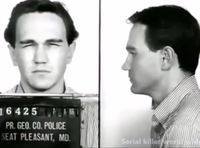
This is the story of James Mitchell “Mike” DeBardeleben and the reverse investigation that occurred as the Secret Service searched for his victims following his arrest in 1983 in Tennessee for passing and manufacturing fake $20 bills, which he used to buy small items at malls across the country, pocketing the change and thereby making a profit.
James Mitchell “Mike” DeBardeleben
The Evidence
The Secret Service was first established in 1865 to combat counterfeiting (one of the many fascinating facts that can be gleaned from the DeBardeleben case). The agency was in the midst of investigating DeBardeleben when they stumbled across, in his car and storage units in Virginia, police paraphernalia, handcuffs, photos of nude and bound women, guns, women’s underwear, newspaper clippings of other people’s crimes, notes and diaries, and audio tapes, all found while searching for the printing press he used to make the counterfeit bills.
Most disturbing were the photos, notes, and audio tapes. The tapes recorded the torture and sexual assault of several women, who investigators surmised were abducted when DeBardeleben posed as a police officer to lure them into his car.
The notes detailed his plans, goals, and tasks, including the type of women and torture he desired, details on how to abduct women, and ideas on how to be more attractive to women and control them. This evidence more than sparked the curiosity of the investigators, Secret Service Agents Greg Mertz, Dennis Foos, Mike Stephens, and Jane Vezeris, who were determined to find the unknown victims and put names to their faces and the crimes committed against them. Were these women murdered? Kidnapped? Sexually assaulted? DeBardeleben refused to talk, and the FBI declined to get involved without any names of victims.
The Investigation
The Secret Service pushed on and sent the photos of the unknown women to law enforcement agencies across the US. Some police departments contacted the Secret Service with matches to open cases regarding abduction, sexual assault, and other crimes. And there was an FBI case in Maryland, the kidnapping and rape of Laurie Jensen, which finally spurred the FBI’s involvement.
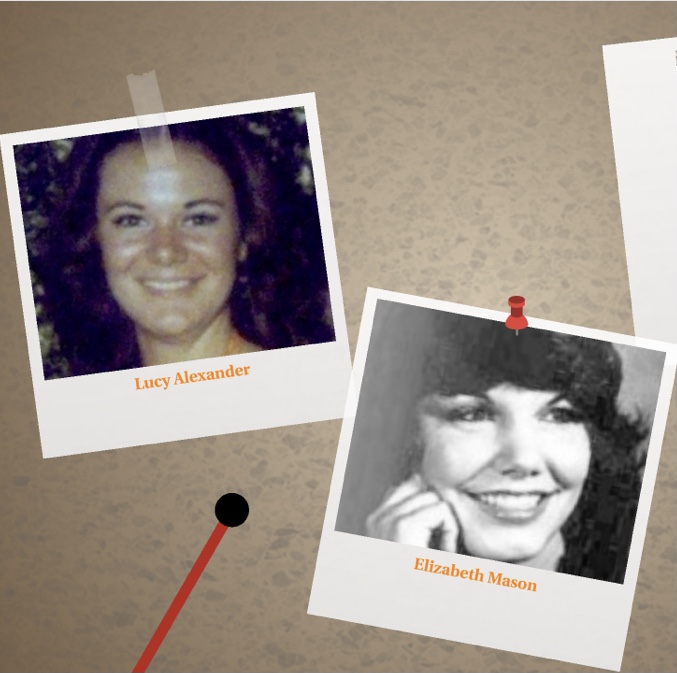
Lucy Alexander and Elizabeth Mason
The FBI was able to identify DeBardeleben in photos he appeared in with the victims, some showing parts of his body (but not his face), by matching freckles and moles on his body to the body in the photos. This was key to the prosecution, along with handwriting analysis and eyewitness testimony from women who could identify themselves in the photos and tapes.
The Prosecution
He was charged with kidnapping, sexual assault, robbery, sodomy, armed robbery, and aggravated criminal sexual assault in Delaware, Maryland, Connecticut, Missouri, Virginia, and New Jersey. In the end, DeBardeleben was sentenced to 375 years for counterfeiting, kidnapping, attempted robbery, and sodomy. The victims of these crimes include Jensen, Lucy Alexander, Elizabeth Mason, Dianne Overton, Maria Santini, and David Starr.
It seems nothing was off-limits for this jack-of-all-crimes. He was also indicted for the murders of Jean McPhaul in Louisiana and Edna Terry McDonald in Rhode Island, but was never tried for these murders, as prosecutors felt that the 375-year sentence for his other crimes would keep him in prison for the rest of his life. Rightly so, as he died of pneumonia in prison in 2011. Investigators speculate that he may have committed many more crimes involving up to 200 victims, including the murder of Joe Rapini, and may have been a serial killer.
Where to Watch the Case
Hear No Evil, The New Detectives, and Cruel Deception (an FBI Files special) capture the many twists of the DeBardeleben case. Hear No Evilincludes excerpts from the audio tapes (omitting the most graphic parts), while Cruel Deception includes photos of the evidence found during the investigation, as well as some of DeBardeleben’s notes.
The New Detectiveslooks at the story from the perspective of the FBI profiler who examined the case, and incorporates some photos of evidence, but none of the audio. The case is also detailed in Stephen G. Michaud’s book Beyond Cruel: The Chilling True Story of America’s Most Sadistic Killer, previously published as Lethal Shadow: The Chilling True-Crime Story of a Sadistic Sex Slayer.
Click image to buy book
Learn more about the case in Hear No Evil(“The Sound of Terror,” Season 1, Episode 5), The New Detectives(“Mind Hunters,” Season 2, Episode 1), and Cruel Deception.
Offices may be shuttered, banks may be closed, but murder doesn’t take time off for the holidays. Ring in the New Year with these true crime episodes featuring murders around New Year’s Eve and New Year’s Day. Tales of mass murder, friends killing friends, intimate partner homicide, cold cases, and even serial killers who got their start on New Year’s Eve. There’s something for everyone in this smorgasbord of true crime!
Homicide for the Holidays: “New Year’s Evil” (Season 2, Episode 4)
Murder Comes to Town: “Lord of the Rockies” (Season 2, Episode 9)
Killer Kids: “Simon Says/For No Good Reason” (Season 3, Episode 7)
It’s New Year’s Eve 2000 in Guffey, a small town in Colorado, and Tony Dutcher spends the night at the house of his grandparents, Carl and JoAnna Dutcher. When no one hears from them a few days later, sheriffs do a welfare check and find Carl and JoAnna shot and Tony missing. They discover Tony in a fort nearby, with his throat slashed. They turn to his friends to solve the case.
Stream Homicide for the Holidays on Peacock and Hulu
Stream Killer Kids on Amazon Prime Video and The Roku Channel
Homicide for the Holidays: “Bloody New Year’s” (Season 2, Episode 8)
Two days before New Year’s Eve 2014, in Edmonton, Alberta, Cindy Luu is shot while her husband and three children are home, by a man unknown to them. Police then receive a 911 call from a woman concerned about her father, who seems suicidal. They go to his house and discover three bodies lined up in the living room and four others throughout the house. They eventually realize the link between the murders and find the killer.
Stream Homicide for the Holidays on Peacock and Hulu
Dateline NBC: “After the Party” (Season 24, Episode 47)
It’s 2011 in West Evans, Colorado, and a New Year’s Eve party at the Fallis house just ended. Ashley and Tom Fallis are arguing. Soon after, Tom calls 911 and tells the operator that Ashley shot herself. He reveals to the police that she was upset about a recent miscarriage and had threatened to commit suicide in the past. The coroner rules the death a suicide, but the case is later reopened after new witnesses come forward, and Tom is charged with murder. Keith Morrison narrates the episode.
Stream Dateline NBC on Peacock, Hulu, and Amazon Prime Video
The Murder Tapes: “Sergeant Hassel” (Season 8, Episode 2)
Deadly Women: “Making a Killing” (Season 14, Episode 13)
American Justice: “Sleeping with the Enemy” (Season 16, Episode 7)
Snapped: Killer Couples: “Kemia Hassel and Jeremy Cuellar” (Season 13, Episode 8)
Killer Cases: “The New Year’s Eve Murder” (Season 2, Episode 1)
New Year’s Eve 2018 in St. Joseph, Michigan. Kemia Hassel calls 911 to report that her husband, Tyrone Hassel III, had been shot outside the house. Family and friends reveal to police that Kemia was having an affair with an army colleague of Tyrone, and that she would receive hefty life insurance and death benefits if Tyrone died.
Stream The Murder Tapes on Hulu, Amazon Prime Video, The Roku Channel, and Discovery+
Stream Deadly Women on Hulu, Amazon Prime Video, and Discovery+
Stream Killer Cases on Hulu, Amazon Prime Video, and The Roku Channel
Wicked Attraction: “Evil in the Blood” (Season 3, Episode 3)
New Year’s Day 2006 in Richmond, Virginia, and firefighters respond to a fire at the house of the Harvey family and find all four members stabbed and bludgeoned to death. A few days later, police do a welfare check on Ashley Baskerville and discover her and her parents, Mary and Percyell Tucker, suffocated and stabbed to death. Police connect the cases through a ring found on one of the victims, and link both to an older murder.
Stream Wicked Attraction on Hulu, Amazon Prime Video, and Discovery+
2013. It’s New Year’s Eve in Robesonia, Pennsylvania, and Ashley Kline is a no-show at a party. Police discover her personal items at a factory two days later, then two hikers stumble across her burned body in a wildlife preserve on January 12. She had been stabbed and beaten.
Stream Unusual Suspects on Amazon Prime Video and Discovery+
Cold Case Files: “Weepy-Voiced Killer; The Mr. Big Sting” (Season 3, Episode 14)
Mark of a Serial Killer: “Killer Caller” (Season 2, Episode 1)
New Year’s Day 1981 in St. Paul, Minnesota. Police get a phone call from a man reporting that a woman is hurt outside an industrial building, a man with a “weepy” voice. Karen Potack, who celebrated New Year’s Eve in the Twin Cities at a bar, had been beaten, but is still alive. After another phone call and a murder in June, police release the calls to the media, hoping someone can identify the Weepy-Voiced Killer. An additional body and call 14 months later, and witnesses at a bar come forward to identify the person seen with the victim. Yet another victim is found, and police receive a call in which the killer claims that he’s hurt. They find and arrest him, and he eventually confesses.
Stream Cold Case Files on Amazon Prime Video, The Roku Channel, Hulu, Netflix, Peacock, and Discovery+
Kurt Johnson lives a seemingly peaceful life in Cooperstown, North Dakota, and disappears after going to a bar on New Year’s Eve in 2010. Police question the person he left with and find Johnson’s decapitated head in his basement.
Stream Heartland Homicide on the True Crime Network
Cold Case Files: “The Clock Strikes Murder” (Season 7, Episode 16)
Pensacola, Florida. New Year’s Day 1985. Tonya McKinley is found strangled and sexually assaulted. The case goes cold, and it takes 35 years for police to solve it, using genetic genealogy matching the DNA from a discarded cigarette butt to the killer.
Stream Cold Case Files on Amazon Prime Video, The Roku Channel, Hulu, Netflix, Peacock, and Discovery+
















 True Crime Docket